
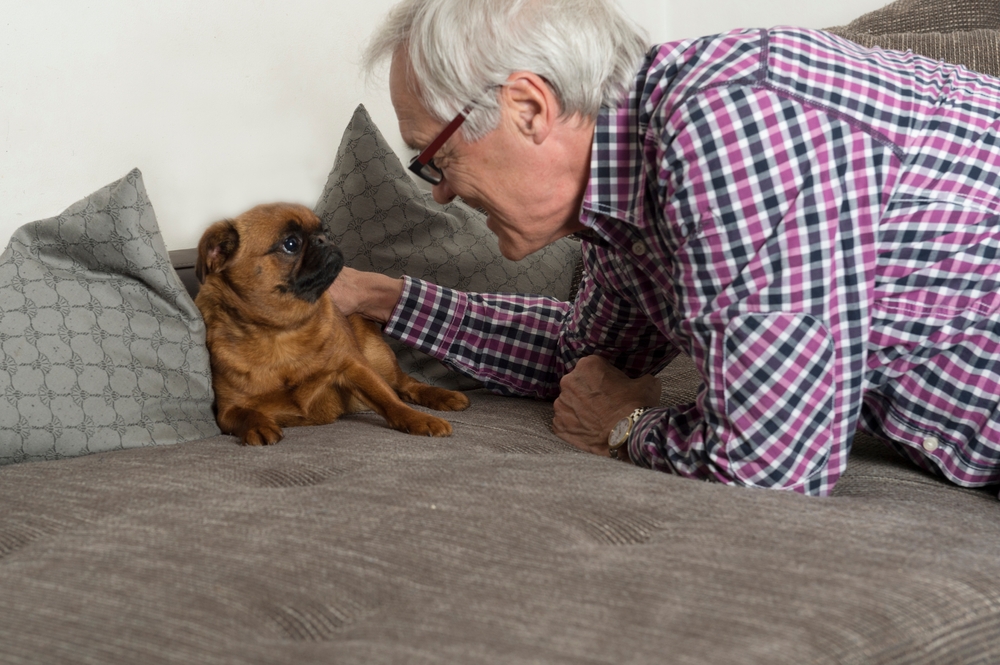
Have you ever looked at your dog or cat and thought, “What are you trying to tell me?”
Maybe your dog suddenly starts licking their paws.
Maybe your cat hides more than usual.
Maybe your pet seems less excited about their favorite walk, meal, toy, or cuddle.
And sometimes, there is no obvious reason.
Our pets cannot sit down and explain what they are feeling. They cannot say, “My joints feel a little stiff today,” or “That thunderstorm really scared me.” Instead, they communicate through their behavior, body language, appetite, energy, and everyday habits.
That is why paying attention to small changes can make such a big difference.
At Secure a Pet RX™, What Is Your Pet Trying to Tell You is more than a fun question. It is a simple way to encourage pet parents to notice what their furry friends may be communicating and find helpful wellness support when they need it.
And now, Winston & Winnie are here to help make that process a little easier, more personal, and much more fun.
Your Pet Is Always Talking to You
Your pet may not use words, but they are constantly giving you clues.
Think about your dog standing beside the door with their leash in their mouth.
You already know what that means.
“Walk time!”
Or your cat sitting beside their empty food bowl and staring directly at you.
The message is probably even easier to understand.
“Excuse me. Someone forgot dinner.”
These moments are funny because we understand some of the signals our pets give us.
But other changes can be harder to understand.
A dog who suddenly stops wanting to jump onto the couch may be telling you something.
A pet who becomes unusually nervous during storms may need extra comfort.
A dog who keeps scratching or licking their paws may be experiencing an issue that deserves attention.
A senior pet who takes longer to stand up after resting may be showing signs of changing mobility.
This is where being observant matters.
Small Changes Can Tell You a Lot
Pet parents often know their animals better than anyone.
You know how your dog normally behaves.
You know how excited they become when you pick up their leash.
You know how quickly they run toward their food bowl.
You know how your cat normally greets you when you come home.
So when something changes, you may notice it before anyone else.
Perhaps your normally playful dog suddenly spends more time lying around.
Perhaps your dog starts hesitating before climbing stairs.
Perhaps your pet becomes nervous whenever you leave the house.
Perhaps your furry friend is not as interested in playtime as they used to be.
These changes do not automatically mean something is seriously wrong.
Sometimes pets simply have an off day.
But repeated or significant changes should never be ignored.
Understanding What Is Your Pet Trying to Tell You starts with noticing these little differences instead of brushing them aside.
What Does Paw Licking Mean
Let us start with something many dog owners have seen.
Your dog sits down and starts licking their paws.
At first, you may think, “Well, dogs lick things.”
And yes, occasional licking can be completely normal.
But frequent licking can be worth paying attention to.
Your dog may be experiencing skin irritation, allergies, environmental triggers, dryness, or another concern.
For example, imagine taking your dog for a walk on a warm afternoon.
Everything seems normal.
Later that evening, your dog starts licking their paws repeatedly.
Instead of simply telling them to stop, take a moment to observe.
Are the paws looking irritated?
Is your dog licking one paw or several?
Has this happened repeatedly?
Are there other changes?
These observations can help you understand what your pet may be communicating.
If the behavior continues or becomes concerning, speak with your veterinarian.
What About Scratching
A little scratching is normal.
We all get an occasional itch.
But constant scratching is different.
If your dog seems unable to relax because they keep scratching, licking, or biting at their skin, it is worth paying attention.
You may also notice changes in their coat or skin.
Maybe their coat looks less healthy than usual.
Maybe they seem uncomfortable.
Maybe they are spending much more time scratching than they normally do.
This is another example of What Is Your Pet Trying to Tell You.
Your pet cannot say, “Something is bothering my skin.”
Their behavior may be the message.
Secure a Pet RX™ offers wellness products designed to support areas such as skin, coat, immunity, mobility, and everyday wellness. However, supplements should complement proper veterinary care rather than replace it.
When Your Dog Suddenly Becomes Nervous
Now let us talk about one of the most emotional situations for pet parents.
Your dog suddenly seems anxious.
Maybe they are perfectly happy one minute and hiding behind the sofa the next.
Then you hear thunder.
Or fireworks begin outside.
Suddenly everything makes sense.
But sometimes nervous behavior does not have such an obvious trigger.
Your dog may become restless.
They may follow you around the house.
They may pace.
They may struggle to settle.
They may become unusually clingy.
And as a pet parent, it can be heartbreaking to watch.
You want to tell them, “You are safe. I am here.”
But your dog may not understand your words.
They understand your presence, your voice, your routine, and the environment around them.
Creating a calm environment can help.
Gentle interaction, predictable routines, appropriate exercise, comfortable resting spaces, and positive reinforcement can all be useful parts of everyday care.
For dogs who need additional support, products such as Calm & Comfort™ are designed to support relaxation and emotional balance without a sedating effect.
Explore Calm & Comfort™ Calming & Stress Support.
When Your Dog Is Suddenly Less Active
Here is another situation that can make any pet parent worry.
Your dog used to race around the house.
Now they seem to move more slowly.
They still eat.
They still want attention.
But something feels different.
Maybe they are taking longer to get up after sleeping.
Maybe they are no longer jumping onto the couch.
Maybe they hesitate before using stairs.
Maybe walks that once excited them now seem like hard work.
For an older dog, changes in mobility can happen gradually.
That does not mean you should simply accept discomfort as a normal part of ageing.
Gentle activity, maintaining a healthy weight, providing a comfortable resting space, and discussing mobility changes with your veterinarian can all be important.
You can also explore nutritional support designed for joint and mobility wellness.
The goal is not to force your pet to act like a puppy forever.
The goal is to help them enjoy the activities that make them happy for as long as possible.
What If Your Pet Seems Tired All the Time
Every pet needs plenty of rest.
A sleepy dog is not automatically an unhealthy dog.
But what happens when your pet seems different from their normal self?
Your dog may still get up for meals, but they no longer rush to greet you.
They may sleep much more than usual.
Their favorite toy does not seem interesting anymore.
Their normal excitement seems to have disappeared.
This is when observation becomes especially important.
Energy can be affected by many things, including age, activity, diet, stress, illness, and other health concerns.
If your pet has a sudden or persistent change in energy, it is important to consult your veterinarian rather than assuming a supplement alone will solve the problem.
Sometimes Your Pet Is Simply Asking for Better Daily Care
Not every wellness concern requires a dramatic solution.
Sometimes the answer starts with simple everyday habits.
Fresh water.
Balanced nutrition.
Regular movement.
Enough sleep.
Mental stimulation.
A comfortable place to rest.
Regular grooming.
Routine veterinary checkups.
And most importantly, attention from you.
Your pet may not understand everything you do for them, but they absolutely benefit from consistent care.
A ten-minute play session can become the best part of your dog’s day.
A gentle brushing session can become quality bonding time.
A peaceful evening beside your cat can provide comfort and security.
Pet wellness is often built through these small moments.
This Is Where Winston & Winnie Come In
Searching the internet every time your pet does something unusual can become overwhelming.
One website says one thing.
Another website says something completely different.
Then you are left wondering what information you should trust.
That is why Secure a Pet RX™ created Winston & Winnie.
The idea is simple.
Tell Winston & Winnie what you have noticed about your pet in your own words.
Maybe your dog is scratching.
Maybe your pet seems nervous.
Maybe your dog has become less active.
Maybe you simply want to support their everyday wellness.
Winston & Winnie can help you explore simple wellness options based on what you share.
It turns a potentially confusing experience into something much more approachable.
From Scratching Paws to Stiff Joints
Winston & Winnie can help pet parents explore several common wellness areas.
Everyday Wellness
If you simply want to support your pet’s daily nutrition, energy, immunity, and overall wellness, you can start there.
Skin, Paws and Coat
If scratching, paw licking, dry paws, skin concerns, or coat condition have caught your attention, Winston & Winnie can help you explore relevant wellness support.
Calm and Comfort
If your pet becomes nervous during travel, storms, fireworks, grooming, vet visits, or time alone, you can explore calming support.
Mobility and Joints
If your dog seems stiff or less willing to move, jump, climb, or play, mobility support may be worth exploring alongside appropriate veterinary guidance.
The important part is that you start with what you have actually noticed.
You do not need to know the perfect medical term.
You can simply explain what is happening.
A Real Life Example
Imagine this.
You have a seven-year-old dog named Max.
For years, Max has been the first one waiting at the door for his morning walk.
Recently, you notice something strange.
He still gets excited when you pick up the leash, but when you reach the stairs, he pauses.
You think, “That is unusual.”
The next day, he does it again.
Then you notice that he takes a little longer to stand up after his afternoon nap.
You could ignore it.
Or you could pay attention.
You might start keeping his activity gentle, make sure he maintains a healthy weight, give him a comfortable place to rest, and speak with your veterinarian about the change.
You can also explore nutritional support for mobility.
That is what being a thoughtful pet parent looks like.
It is not about panicking over every little thing.
It is about noticing patterns.
Another Example You May Recognize
Now imagine Bella.
Bella loves going everywhere with her family.
But whenever the family starts preparing for a trip, she becomes restless.
She follows everyone around.
She pants.
She struggles to settle.
Once they arrive at the destination, she gradually relaxes.
This may be travel-related stress.
Instead of thinking, “She is just being difficult,” her family can recognize that Bella may be communicating discomfort or nervousness.
They can work on making travel more predictable and comfortable, provide reassurance, and discuss appropriate calming options with their veterinarian.
Small changes in how we respond can make a big difference to our pets.
You Do Not Have to Figure Everything Out Alone
One of the hardest parts of being a pet parent is not knowing what to do when something changes.
You love your pet deeply.
That makes every unusual behavior feel bigger.
You may wonder if you are missing something.
You may search late at night because your dog has started doing something unusual.
You may worry because your cat is acting differently.
That feeling is completely understandable.
The goal of Winston & Winnie is not to replace your veterinarian.
It is to make everyday wellness conversations easier.
The Winston & Winnie Pet Wellness Guide provides general wellness information only and is not a substitute for professional veterinary advice.
If your pet has severe, sudden, worsening, or concerning symptoms, contact your veterinarian promptly.
Your Pet’s Small Signals Matter
Your pet may never tell you exactly what hurts.
They may never explain why they are nervous.
They may never say that they are struggling to climb the stairs.
But they communicate.
Through their eyes.
Their energy.
Their appetite.
Their movement.
Their sleeping habits.
Their behavior.
Their little routines.
And sometimes, the most loving thing you can do is simply stop and notice.
That is the heart behind What Is Your Pet Trying to Tell You.
You do not have to become an animal behavior expert overnight.
Start by knowing your pet.
Notice what is normal for them.
Pay attention when something changes.
Ask questions.
Seek professional veterinary guidance when needed.
And use trusted wellness resources to support the everyday care your pet already receives.
Meet Winston & Winnie
If your pet could talk, what would they tell you today?
Maybe they would ask for another walk.
Maybe they would request an unreasonable number of treats.
Maybe they would simply want to sit beside you.
Or maybe their behavior is telling you that they need a little extra support.
Instead of guessing, ask Winston & Winnie.
Ask Winston & Winnie about your pet.
Because sometimes better pet care starts with one simple question.
What Is Your Pet Trying to Tell You?
FAQs
Can Winston & Winnie diagnose my pet?
No. Winston & Winnie provides general pet wellness information and product suggestions. It does not replace professional veterinary advice or diagnosis.
What can I ask Winston & Winnie?
You can describe things you have noticed about your pet, such as scratching, paw licking, nervousness, low energy, stiffness, mobility concerns, or general wellness questions.
What if my pet suddenly becomes sick?
If your pet has sudden, severe, or worsening symptoms, contact your veterinarian. Do not rely on an online wellness guide for urgent health concerns.
Can supplements replace veterinary care?
No. Supplements should be viewed as nutritional wellness support. They should not replace veterinary diagnosis, treatment, prescribed medication, or routine checkups.
How can I tell if my dog’s behavior has changed?
Start by comparing their current behavior with their normal routine. Changes in appetite, energy, movement, sleep, social behavior, or reactions to everyday situations may be worth discussing with your veterinarian.
Can calming supplements help nervous dogs?
Some nutritional supplements are designed to support relaxation and emotional balance. The right option depends on your individual dog, so discuss new supplements with your veterinarian, particularly if your dog has an existing health condition or takes medication.
What are some signs that my dog may need mobility support?
Changes such as stiffness, hesitation on stairs, reluctance to jump, difficulty getting up, or reduced interest in physical activity may indicate that your dog needs closer attention. A veterinarian can help determine the underlying cause.
Why is paying attention to small changes important?
Pets often communicate through behavior rather than words. Noticing changes early can help you understand your pet better and know when professional advice may be appropriate.